
 Target account development Reach decision-makers at target companies.
 New market entry Test a sector before investing in it.
 International expansion First customers in a new country.
 Launching a new offering Measure market interest in a product.
 Commercial opportunities programme Qualified meetings every week for 90 days.
 Signal-based outreach Engage when the need arises.
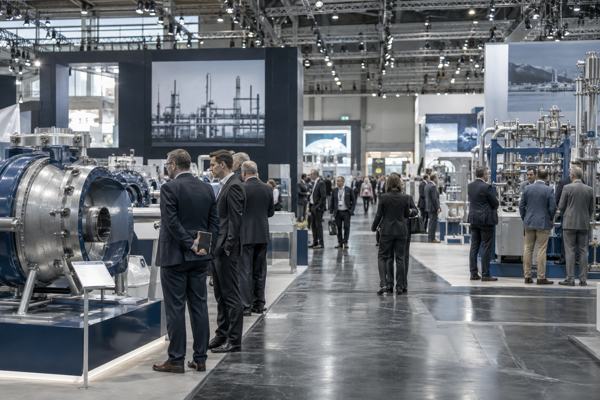 Trade shows and events A full schedule before the trade show opens.
 Account reactivation Reconnect with lost accounts.
 Eleven industry groups
 Nine engagements, from situation to outcome
 Regulations and markets
 Firm presentation
 A commercial growth firm
Airbus is targeting monthly production of 70 to 75 A320 family aircraft by the end of 2027, followed by 12 A350s per month in 2028. This increase creates opportunities for suppliers, but it comes with cost, capacity and supply constraints that require precise account qualification.
Production targets set through to 2028
The A320 family is the focus of the first production rate target announced by Airbus. The aircraft manufacturer plans to produce between 70 and 75 aircraft per month by the end of 2027. The second A320 final assembly line in Toulouse forms part of this industrial organisation. The new A320 delivery centre in Toulouse is also presented as a way to support the production ramp-up.
The effort must continue across the A350 programme. Airbus is targeting 12 aircraft per month in 2028, extending the production horizon beyond the A320 family alone. These targets indicate a sustained production ramp-up across several civil aviation programmes. However, they do not support the conclusion that every supplier will automatically benefit from new volumes.
Persistent constraints on capacity and costs
GIFAS reports that operational pressures persist in certain segments of the sector. Activities most exposed to cost and capacity constraints are particularly affected. An increase in production rates can therefore raise industrial requirements while limiting the ability of some companies to take on new business. The situation must be assessed according to the programme, the product and the company's position in the value chain.
Procurement also remains an area requiring close attention. At its annual conference in February 2026, Airbus indicated that the shortage of Pratt & Whitney engines would require continued attention throughout the year. This constraint shows that a production target does not remove upstream operational difficulties. Suppliers must therefore distinguish between announced targets, capacity actually available and requirements that are genuinely open.
Commercial qualification to be conducted account by account
An industry rule or a production ramp-up target demonstrates neither the existence of an active project nor an available budget within a company. The commercial population must be defined using the target customer profiles and filters specific to each campaign. Activities outside the product scope, territory or legal role must be excluded. No uniform legal threshold can be inferred solely from the production ramp-up.
Commercial potential also depends on the situation of the targeted supplier. Its order book may already be full, its teams fully committed to production or its qualification arrangements locked. In this case, an outbound acquisition approach becomes secondary or even unnecessary. Qualification must therefore confirm the capacity to serve new programmes before prospecting begins.
What this changes for suppliers
For some suppliers, increased production rates may justify diversifying their programme portfolio. They may also lead them to seek compatible customers or enter export markets. This option depends on the product, the target territory and the company's role in the programme. It must be confirmed with each account rather than inferred from a general trend.
We can map accounts that match the supplier's capabilities and qualifications, then identify the relevant decision-makers. We then engage these contacts to qualify their interest, the scope of the need and its compatibility with the proposed offering. This approach makes it possible to exclude accounts without an accessible project or the capacity to integrate the solution. It focuses commercial effort on customers where the production ramp-up can generate a verifiable opportunity.